Deer Isle Chair
Woodworking, crafts
In 2025 I won a fellowship to do a 2-week workshop at Haystack Mountain School of Crafts, in Deer Isle, Maine. I chose a class where we’d make a chair from green wood in the style of Daniel Poynor, a formerly enslaved Black American designer and woodworker who revolutionized the design and quality of the traditional ladder-back chair—to the extent that he not only became famous for it, but his chairs are still in use today. (Learn more about Poyor, the chairs, and the work of my workshop’s instructor Charlie Ryland and fellow chairmaker Robell Awake here.)
Poynor was able to buy his and his wife’s freedom from the proceeds shared with him by his enslaver, and together they built a workshop that was run and then inherited by their sons and descendants.
I was drawn to learning to make this chair not only because of the Black American heritage I share with Poynor family, and my lifelong love for making things, but also because of the design heritage it shares with a number of ladderback chairs (Kaare Klint’s church chair, Børge Mogensen’s J39 chair) that are design classics in Denmark—a place where I’ve lived, have family, and have been acquiring a deep connection to the material history and culture.
The process began with chopping a felled log into smaller and smaller pieces until they were roughly sized and shaped for the chair parts, then using a drawknife to shave them down to the precise size and shape needed. We used steam when pieces needed to be bent, but otherwise used finer and finer tools (a spokeshave, then a card scraper) to cut and smooth out curves. Selected pieces were kiln-dried before shaping, so they’d expand with humidity and fit tightly into holes in pieces that hadn’t been dried—and would therefore expand further, with natural weather-related increases in humidity. In this way, the need for glue was largely avoided.
Finally, after a few practice runs, I wove the seat using paper cane.
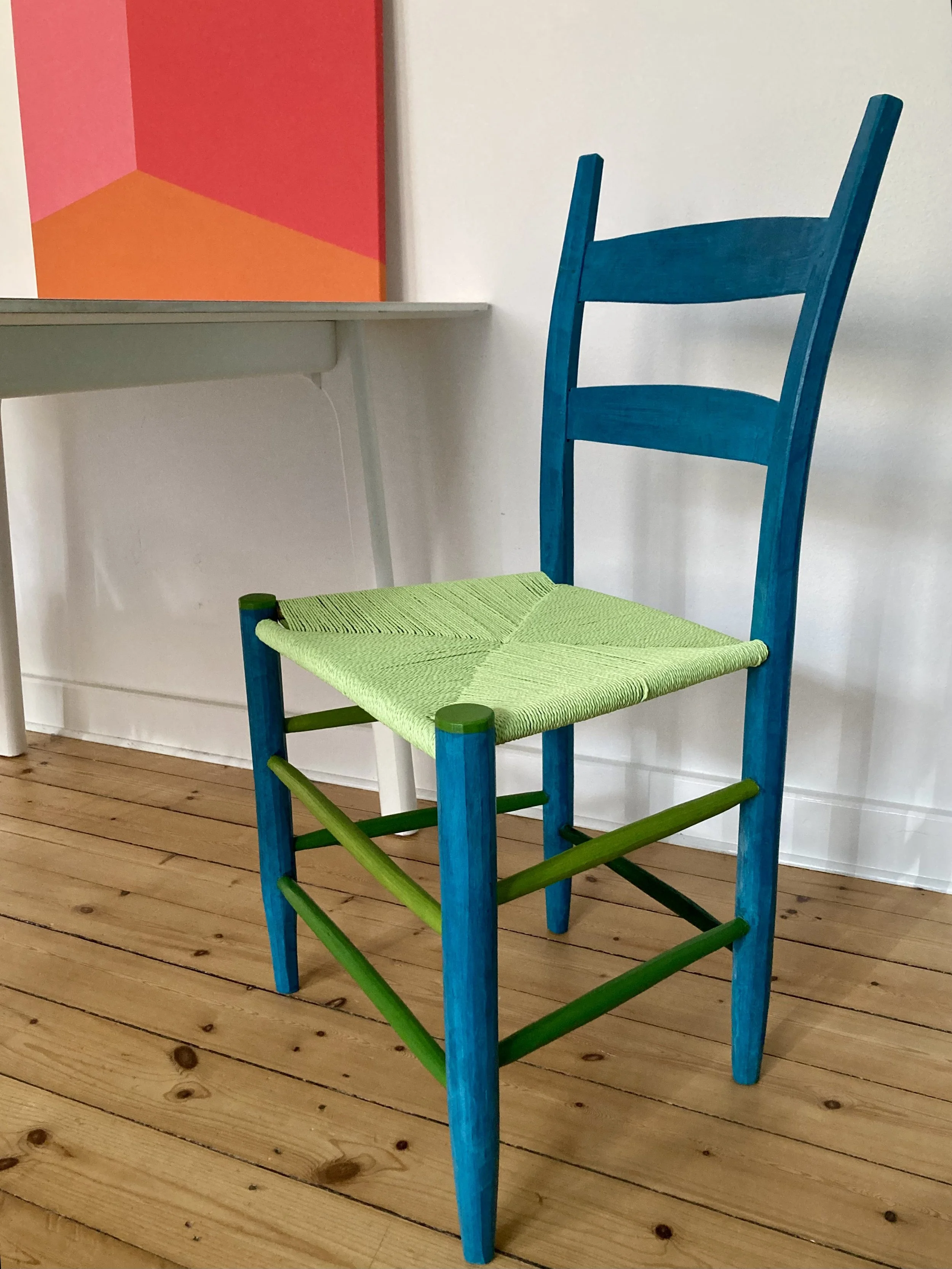
Deer Isle Chair
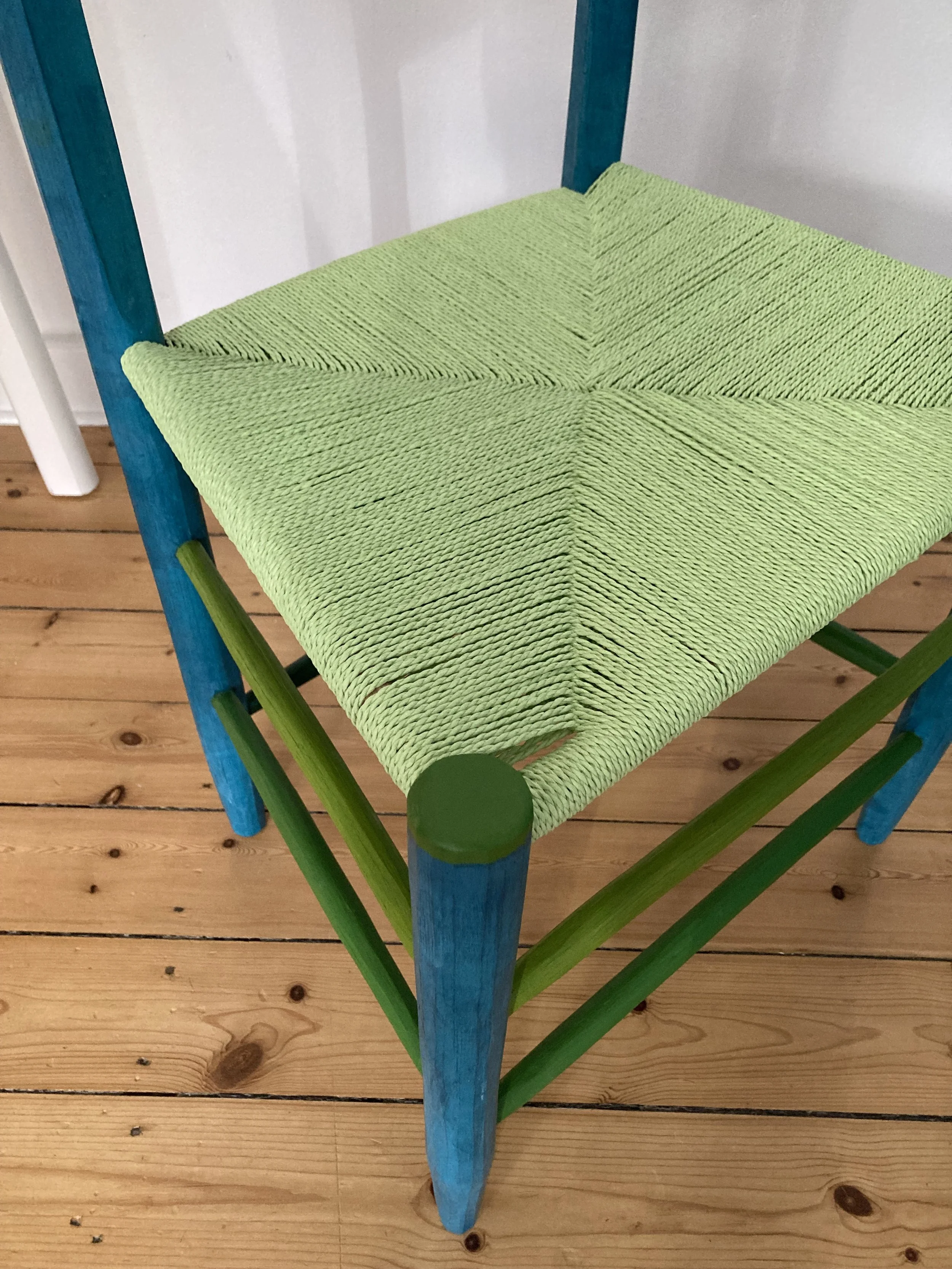
Hand-Caned Paper Cane Seat
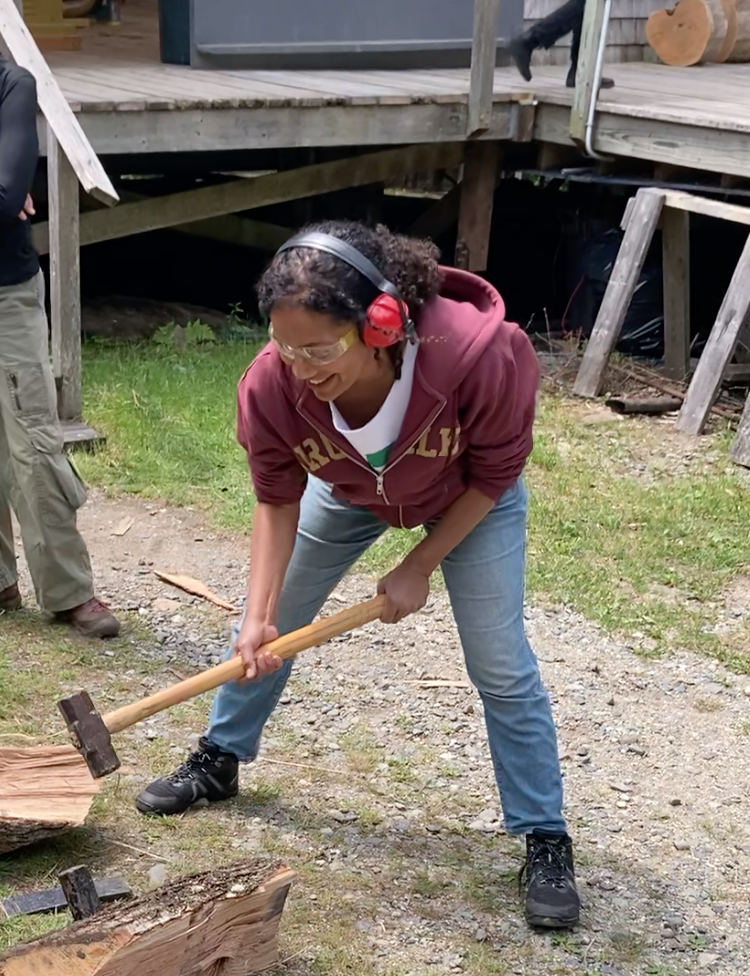
Chopping up a log to make the chair
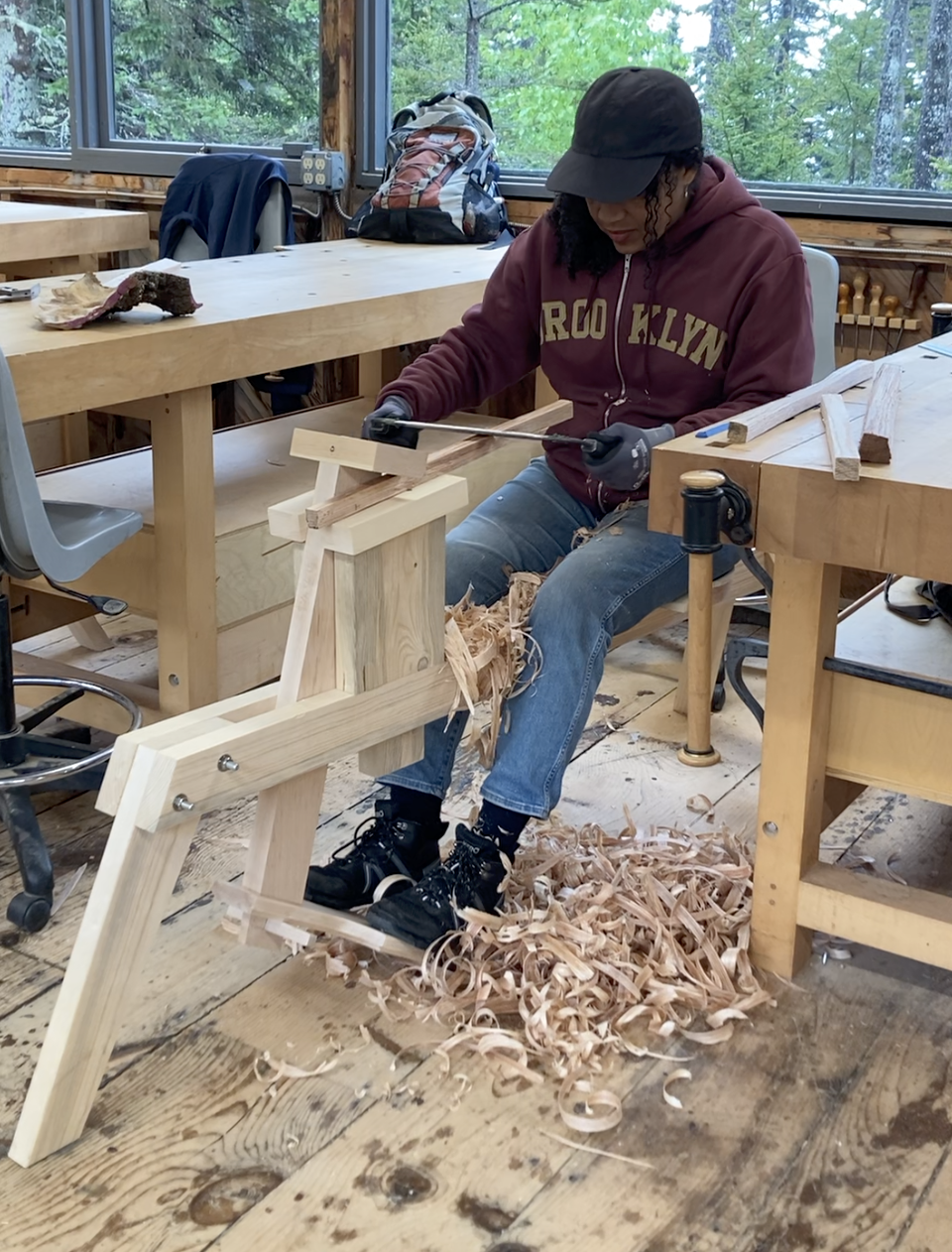
Shaving down the parts by hand
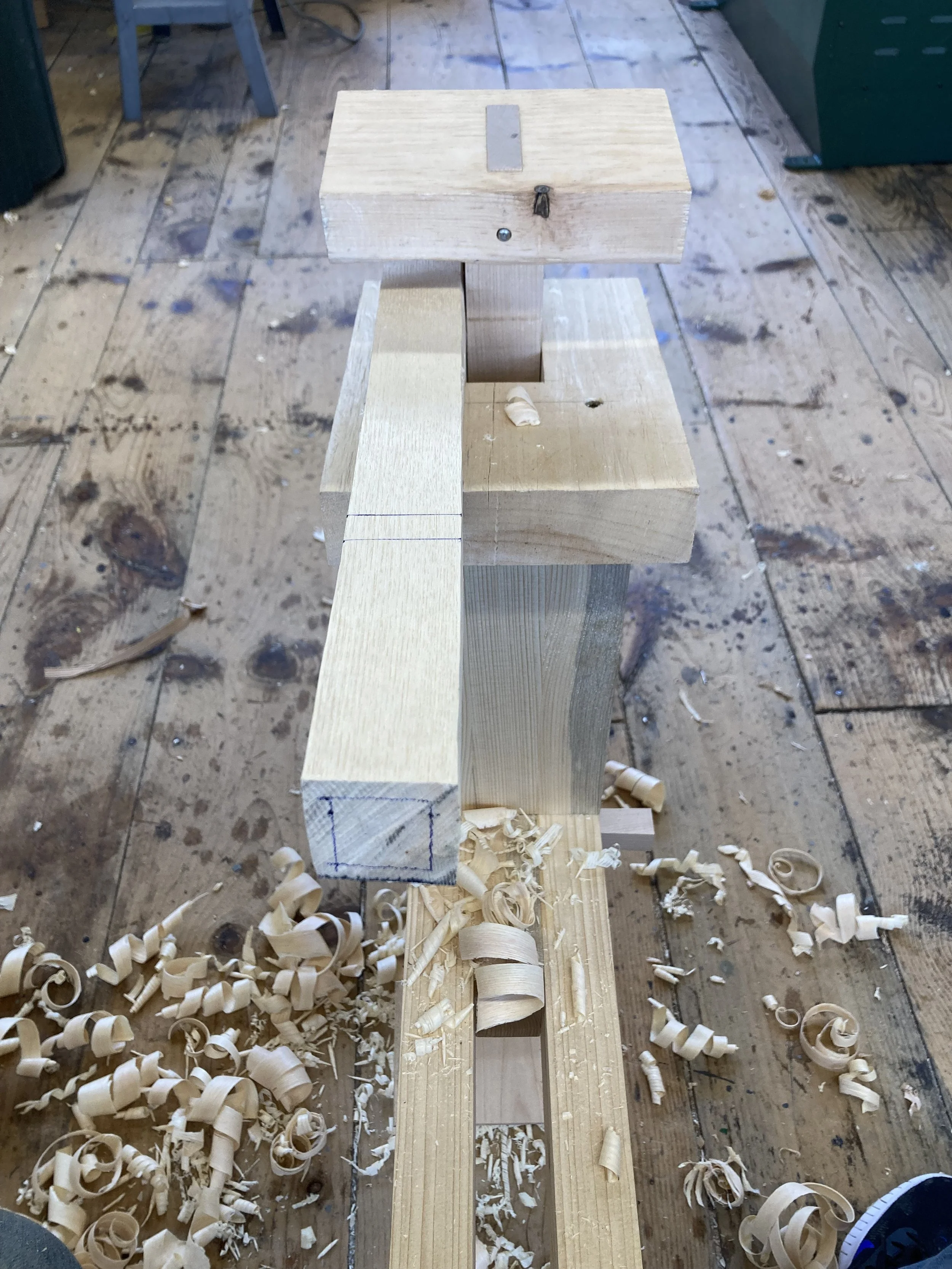
How a chair leg starts
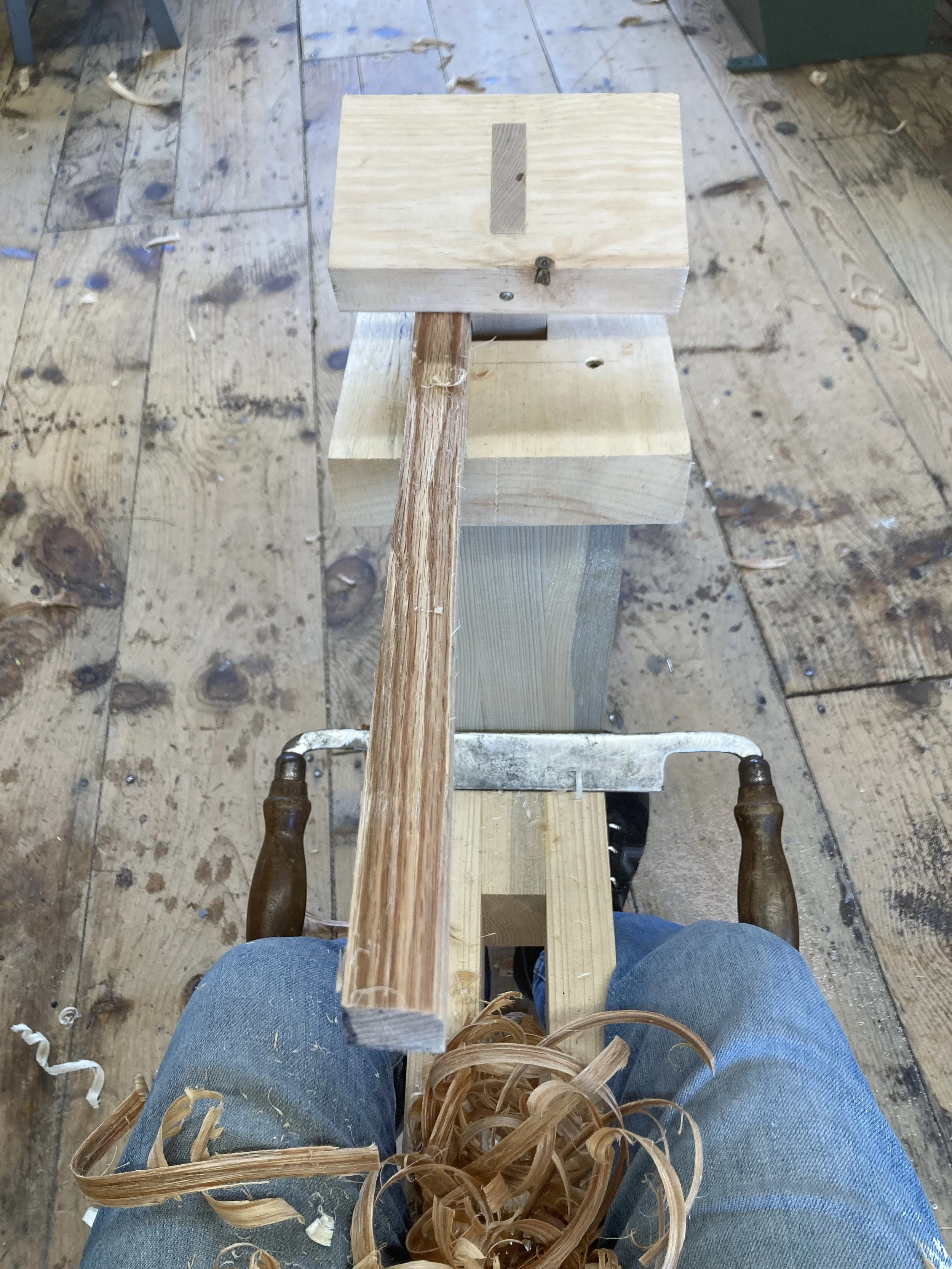
Shaving off outer layers
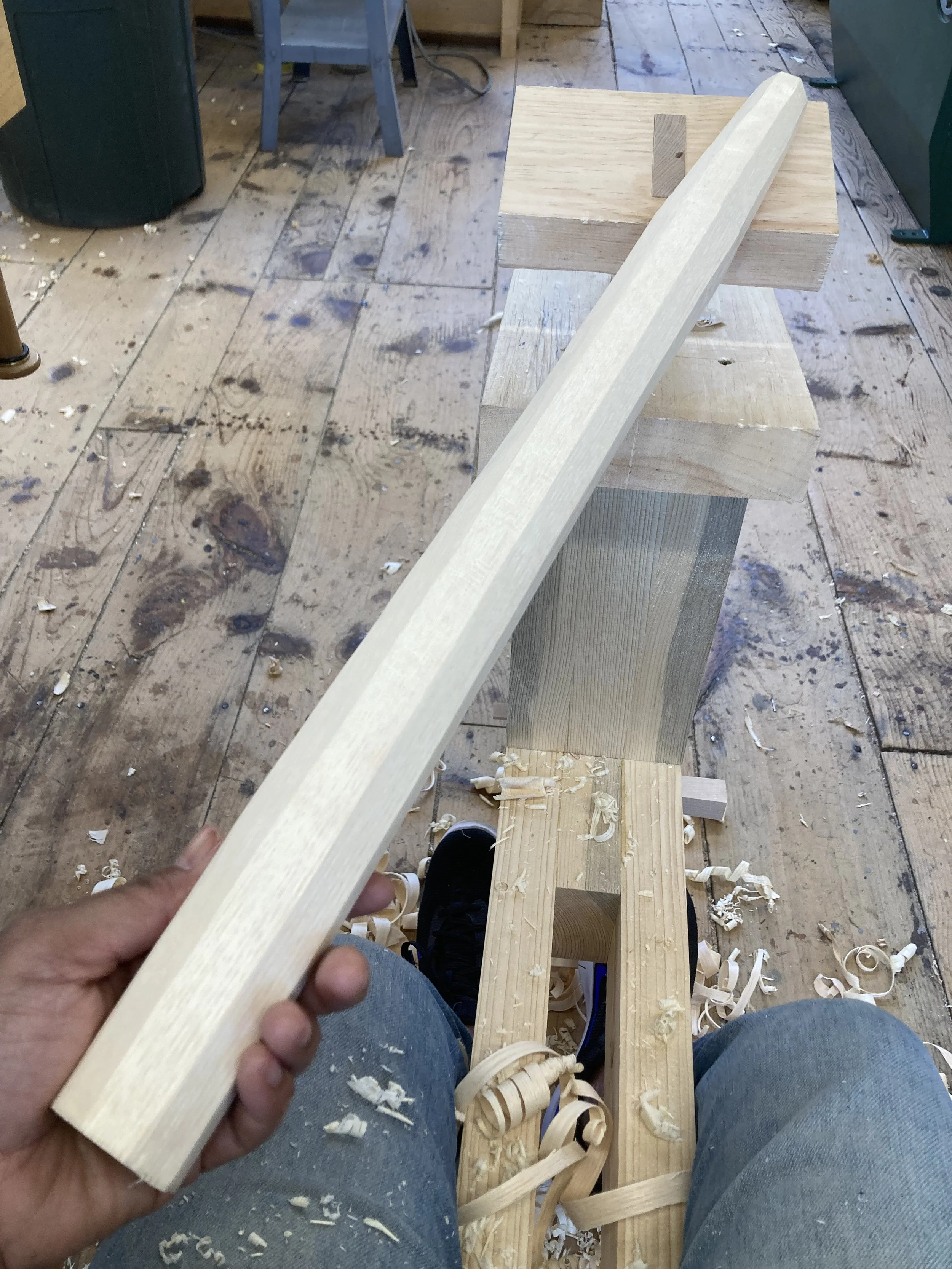
Down to 8 sides, soon to be 16
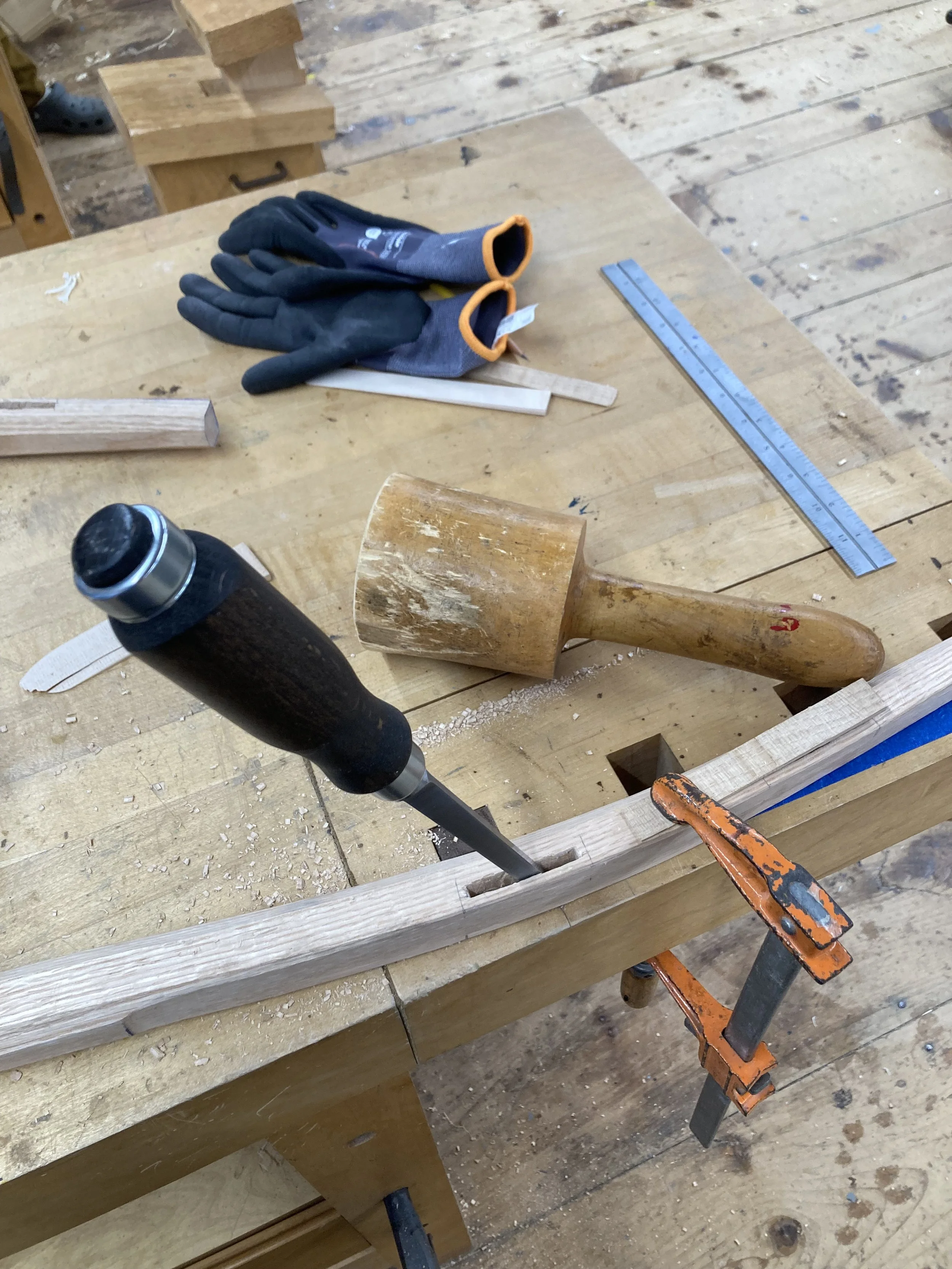
Chiseling mortises for the back slats
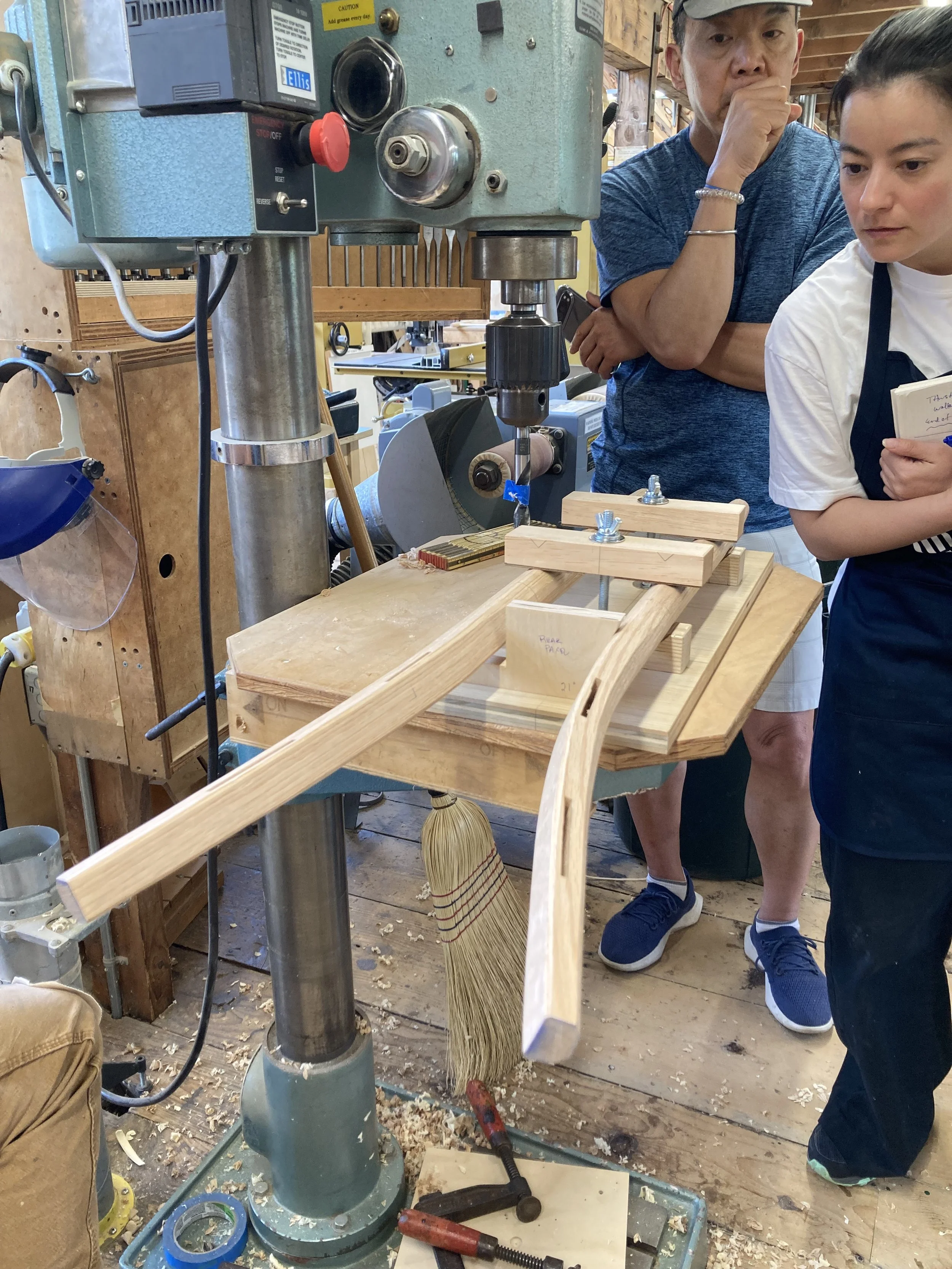
The jig for steam-bending the back posts

Color inspo: a cove on Deer Isle, Maine, where I made the chair
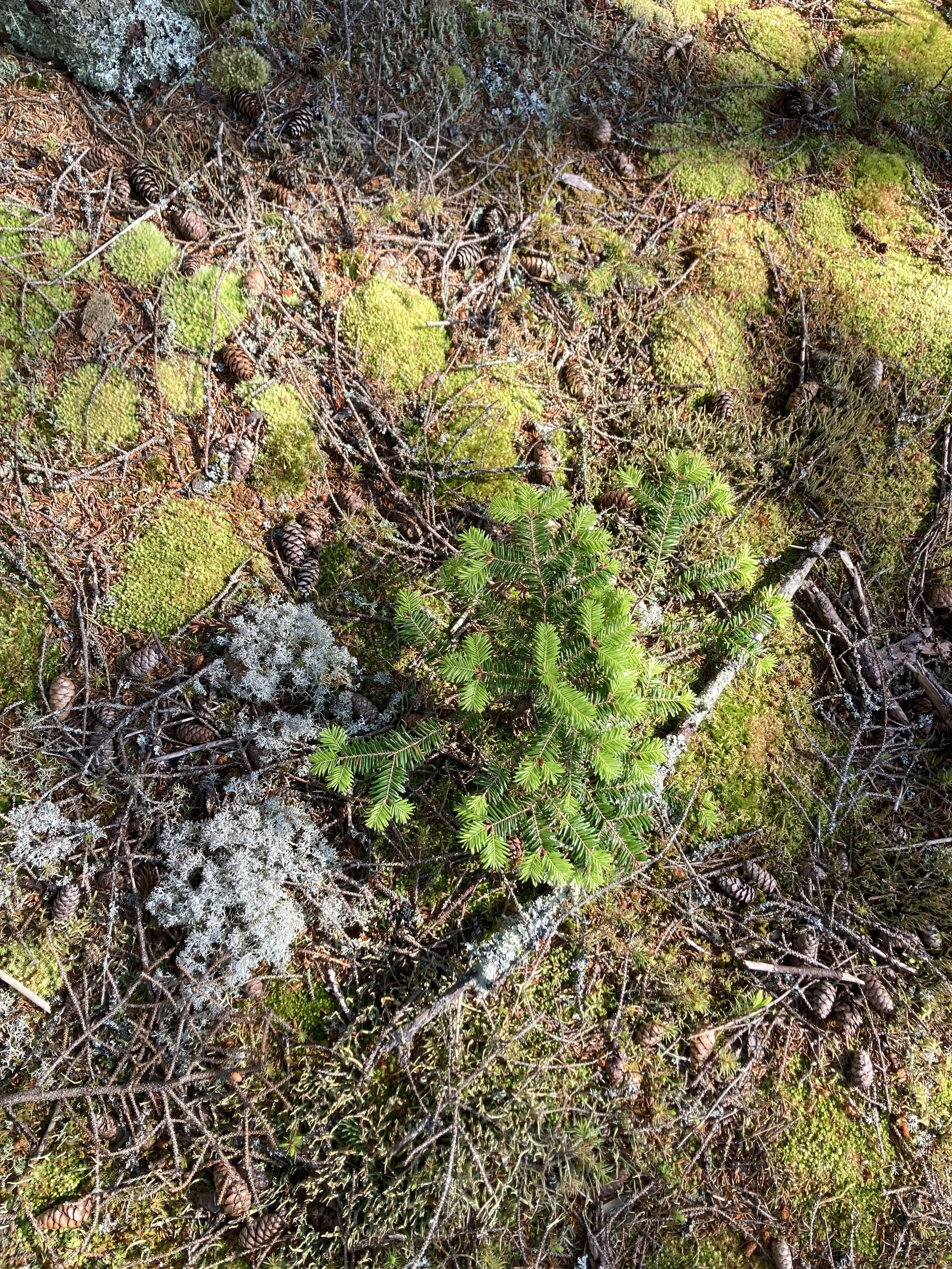
Color inspo: Shades of green plant life on Deer Isle